
When photographers talk about light, we usually talk about what it reveals: direction, softness, color, contrast. We study where the highlights fall and how the eye responds to the brightest part of the frame. We talk far less about shadow in photography.
But every decision about light is also a decision about darkness. And I have come to believe that what I leave in the shadows can matter as much as what I choose to illuminate.
This isn’t a new idea. The painters I admire built whole bodies of work on it, a tradition known as chiaroscuro, and I wrote about them in I’m an Artist Who Happens to Use a Camera. This post is about something narrower, and for me harder: the discipline of leaving things out.
The Goal Is Attention
I build my still lifes in a dark studio, lighting one object or a part of an object at a time, a method I describe in What Is Light Painting Photography?. That gives me a great deal of control over what becomes visible.
But control isn’t really the goal. The goal is attention.
Light tells the viewer where to look. Shadow tells the viewer where not to look, at least not yet.
If every part of a photograph is equally bright, equally sharp, and equally descriptive, the viewer has to decide what matters. Sometimes that is exactly what a photographer wants. In my own work, I’m usually trying to establish a hierarchy. One object speaks first. Another answers quietly. A third barely emerges from the darkness.
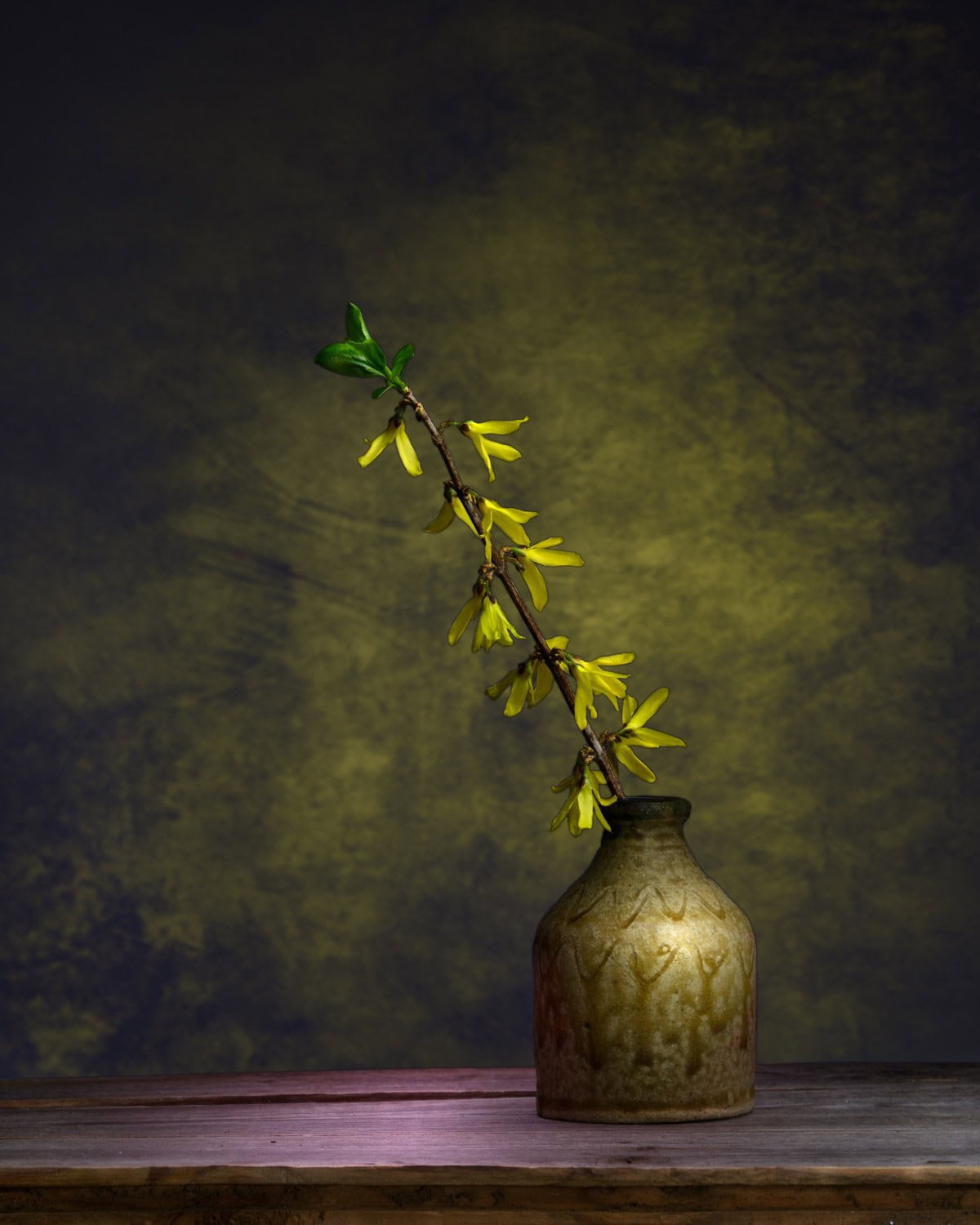
The Temptation to Show More
Early in the process there is always a temptation to show more. A little more detail in the background. A little more light on the side of an object. A little more information in the shadows. Modern cameras make this easy. With today’s dynamic range, I can often recover detail that would once have disappeared completely.
But just because the camera can show something doesn’t mean the photograph needs it.
That’s a difficult lesson, because photography has a strong descriptive instinct. We buy sharp lenses. We admire detail. We enlarge files to see everything the camera captured. When a shadow contains information, it can feel almost wrong to let that information stay hidden.
Yet mystery often depends on restraint. A shadow can simplify a form, separate an object from its surroundings, or hide an unimportant edge. It can let the imagination finish what the camera only suggests.
Sometimes showing less allows the viewer to see more.
Shadow in Photography as an Editor
I ask the same question about shadow in photography in my architectural nightscapes, even though the process is different. (I walk through it in Photographing Pittsboro After Dark.) A building may have dozens of windows, doors, signs, and reflections, and the street around it is visually busy. If everything stays equally visible, the photograph becomes a description of a place rather than an interpretation of it.
Darkness gives me a way to edit. I can quiet the street, let parts of a building recede, and emphasize a doorway or a row of windows. The structure stays recognizable, but the experience of seeing it changes.
How Memory Works
This isn’t far from the way memory works.
When we remember a room from childhood, we don’t recall every object with equal clarity. A lamp may be vivid while the rest of the room is indistinct. We may remember the light through a window, the texture of a table, or the silhouette of someone standing in a doorway.
Memory is selective. Perhaps that’s why photographs built around light and shadow can feel so familiar. They resemble the way the mind chooses what to keep.
Shadow in Photography Has a Mood
There is also an emotional quality to darkness that’s hard to separate from technique. Shadow can create mystery, but it can also create quiet. It can make an object feel old, private, or contemplative, and it gives the viewer room to linger.
That matters in my still life compositions, because the objects I photograph already carry stories. A camera from my Objects & Memory series or an old radio can hold a personal history. End of an Era is about the obsolescence of the cathode ray tube. 71 Seconds to Midnight is about nuclear war and how close we are getting to the destruction of humanity. Midnight Cuban Diary was about my father’s Cuba in the 1940s, before Fidel Castro and the severing of my Cuban family tree. The darkness around these objects lets me resist explaining everything at once.
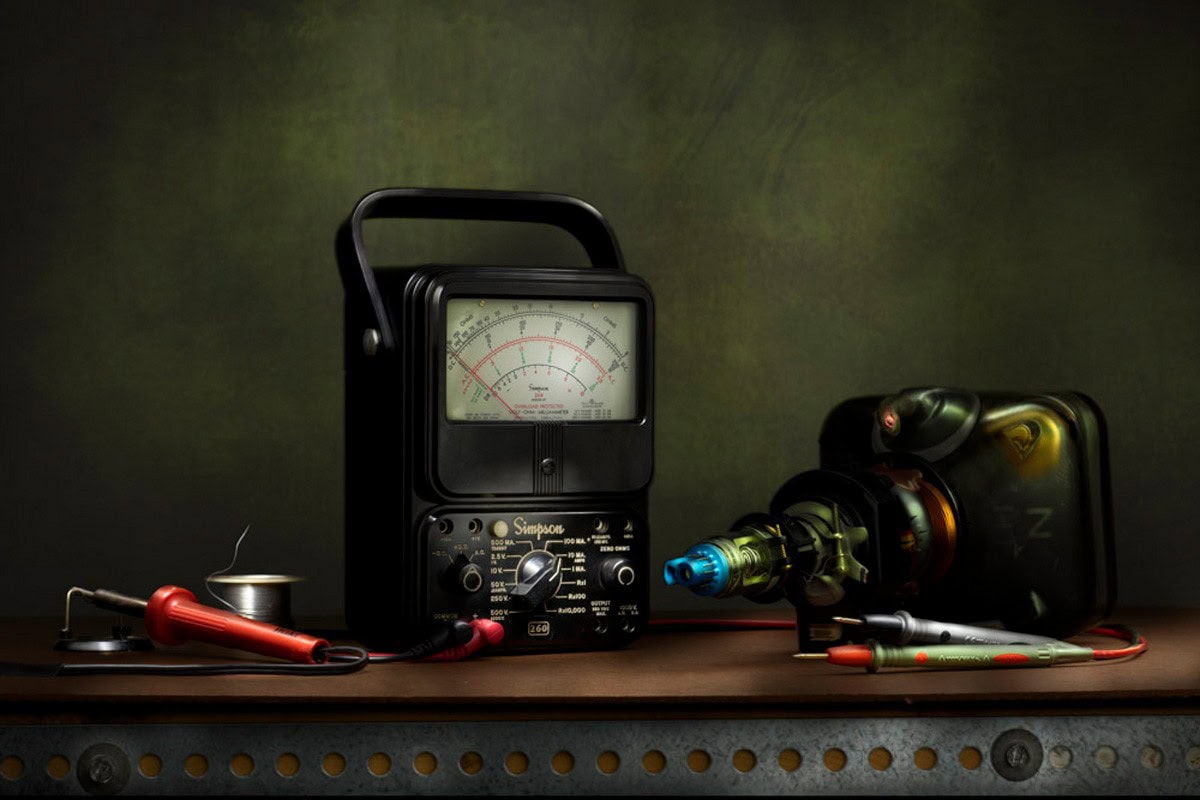
The Paradox of Shadow in Photography
The longer I work this way, the less I think of shadow in photography as the absence of light. It is a compositional element. It has shape, weight, and direction. It can connect parts of an image or separate them, and it can create rhythm as surely as a repeated line or color can.
Shadow is also what gives an object its volume. A photograph is a flat surface, and the only way a round vase or a curved handle can feel solid is through the gradual fall of light into shade. Done well, shadow builds three-dimensional form on a two-dimensional plane. Without it, the object flattens into an outline.
Most of all, shadow creates the conditions in which light can matter. A bright object in a bright scene is simply visible. A small area of light surrounded by darkness can become a revelation.
That may be the central paradox of working with light: to make it powerful, I often have to resist using too much of it.
The question isn’t, How much can I illuminate?
It’s, How much do I need to reveal?
Everything else can wait in the shadows.
See how shadow in photography plays out in the still life and nightscape portfolio, or visit the work in person at the Pittsboro Gallery of Arts, 44-A Hillsboro Street, Pittsboro, NC.
A Question to Consider
When you look at a photograph, painting, or even a room you know well, what do the shadows contribute? Is there something you understand more clearly because part of it has been left unseen?
Enjoy this kind of work?
I write The Art of Light and Shadow — stories about photography, light, and the creative process behind each image.